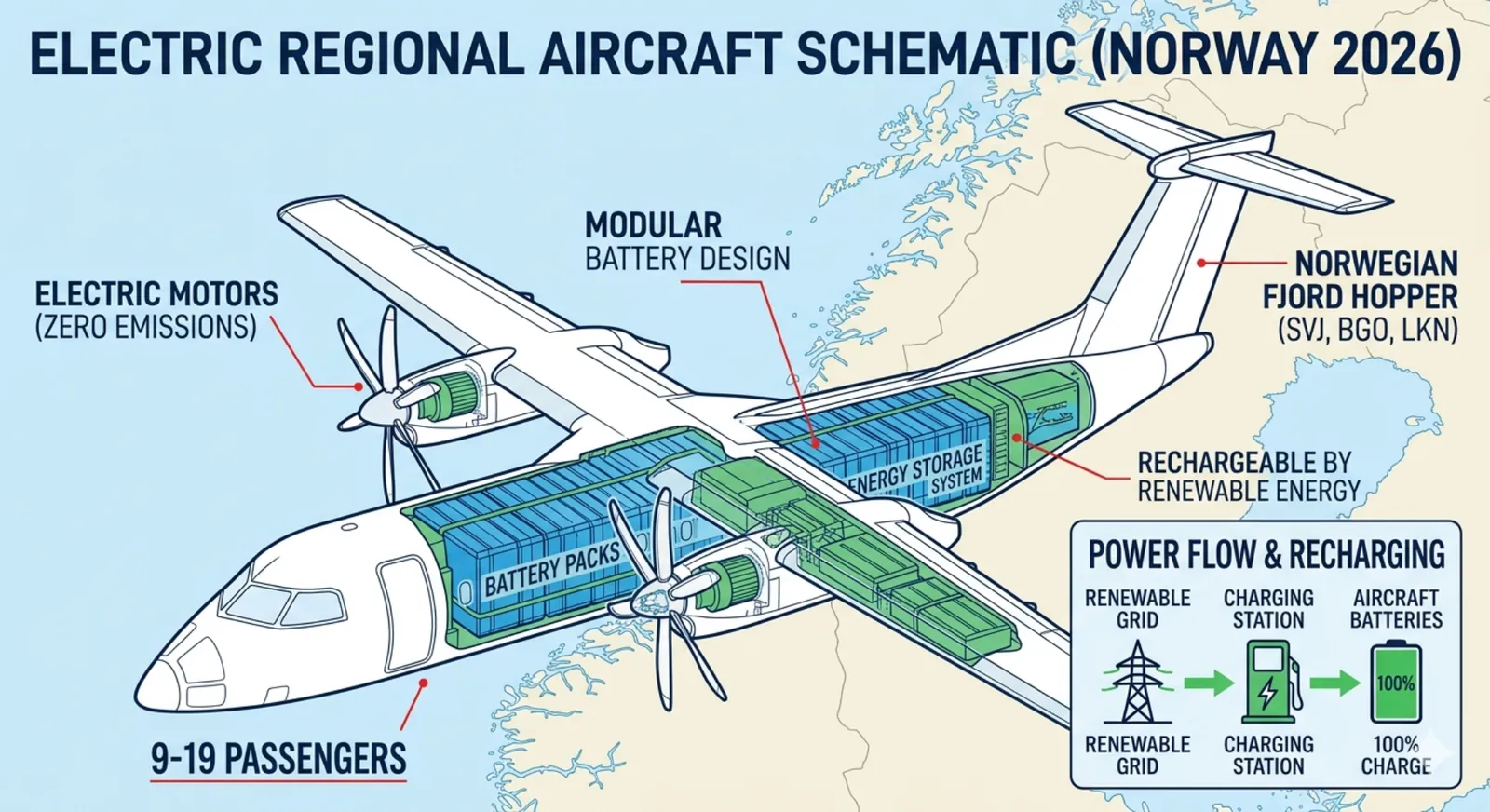
Norway: The Clean Sky Laboratory in 2026
In March 2026, while the global aviation industry continues to debate the viability and costs of Sustainable Aviation Fuel (SAF), Norway has taken a much more tangible, giant leap forward. The airports within the national network managed by Avinor, particularly in the rugged northern fjords, have begun operating the first 100% electric short-haul commercial routes, forever changing the paradigm of regional flight.
The "Fjord Hopper" Concept
Due to Norway's dramatic and rugged geography, journeys that would take 5 to 6 hours winding by car through mountains and ferry interruptions are covered in barely 20 minutes by air. Next-generation electric aircraft, with a capacity of 9 to 19 passengers, are currently connecting established hubs like Bergen (BGO) and Stavanger (SVG) with short-takeoff and landing (STOL) regional airports like Svolvær (SVJ) and Leknes (LKN). The passenger experience is radically different: the vibration and noise of a combustion engine are almost non-existent, allowing for tranquil flights at lower altitudes with unparalleled panoramic views of glaciers and the Arctic Sea.
Why is this revolution critical for the aviation sector?
- Absolute Sustainability: It represents a total 100% reduction of direct carbon and nitrogen oxide emissions on the most frequent domestic hops.
- Reduction in Maintenance and Operational Costs: Modern electric motors have approximately 60% fewer moving parts than a conventional jet or turboprop turbine. Coupled with the low cost of Norwegian hydroelectric power, this is beginning to drastically reduce regional ticket fares for locals.
- Minimal Acoustic Impact: The silent takeoff of these aircraft allows for more flexible airport regulations, authorizing early or late-night departures without causing noise pollution or disturbing local populations near the runways.
If you are planning to explore Norway in 2026, be sure to look for the official "E-Flight" badge when choosing your regional ticket. It's not just a simple point-to-point transfer; it's a unique opportunity to be an active part of the most important chapter in modern aviation history.